 Abraham
Italian cuisine is filled with dishes that seem deceptively simple at first glance but reveal themselves to be masterpieces of flavor and balance once prepared. Among them, saltimbocca alla Romana stands tall as one of the most iconic dishes from the city of Rome. The very name saltimbocca translates to “jumps in the mouth,” a playful description that highlights the burst of flavor this dish delivers. A well-executed authentic saltimbocca alla Romana recipe is more than just meat, sage, and prosciutto; it is a celebration of Roman culinary tradition and the philosophy of letting a few quality ingredients shine without overcomplication.
Preparing saltimbocca alla Romana is not overly complex, which is why it has remained a beloved dish both in Italy and abroad. However, there is a real art to achieving the delicate balance of flavors and textures. The salty richness of prosciutto, the freshness of sage, the tenderness of veal, and the slight tang of white wine all come together in perfect harmony. This dish is not just about eating; it’s about experiencing a tradition that has been passed down for generations in Roman kitchens.
The Origins of Saltimbocca alla Romana
Saltimbocca has a history as colorful as Rome itself. It is said to have originated in the Lazio region, with roots stretching back to at least the 19th century. The first written records of the dish appear in Roman cookbooks from the late 1800s, where it was immediately celebrated for its simplicity and irresistible flavor. The Roman version became the standard, though variations spread throughout Italy and beyond.
What makes the authentic saltimbocca alla Romana recipe so unique is the use of veal, prosciutto, and sage, which are pan-cooked with white wine to create a light yet flavorful sauce. While some regions substitute chicken or pork for veal, purists insist that true saltimbocca alla Romana must use veal as the foundation. In Roman trattorias, the dish remains a staple, often paired with simple vegetables or potatoes to let the meat shine.
The name itself is also revealing. Italians have long appreciated dishes that not only taste good but also evoke imagery. To describe food as something that “jumps in the mouth” is to say that it delivers immediate pleasure, with no effort required. Saltimbocca alla Romana delivers exactly that.
Choosing the Right Ingredients
When preparing this dish at home, ingredient quality makes all the difference. The authentic saltimbocca alla Romana recipe requires only a handful of components, which means that each one must be chosen with care.
Veal as the Foundation
Veal is at the heart of the dish. Thin slices of veal cutlet are preferred because they cook quickly and remain tender. Look for meat that is pale pink with fine marbling, as this will ensure a delicate texture. The thinness of the veal also makes it the perfect canvas for the flavors of sage and prosciutto to shine through without overwhelming the palate.
The Role of Prosciutto
Prosciutto crudo, particularly prosciutto di Parma or prosciutto di San Daniele, is ideal for this dish. It should be sliced thin enough to almost melt into the veal during cooking. The saltiness of the cured ham complements the mild flavor of veal while adding richness. If the prosciutto is too thick, it will overpower the dish, so delicate slices are essential.
Sage Leaves for Freshness
Fresh sage is not just a garnish; it is an essential part of saltimbocca’s flavor profile. The herb brings a slightly peppery, aromatic note that contrasts beautifully with the richness of the prosciutto. Only fresh leaves should be used, as dried sage lacks the vibrancy needed for this dish.
Wine and Butter for the Sauce
Dry white wine forms the base of the sauce, with butter whisked in at the end to create a silky finish. The wine should be something you would happily drink, such as a crisp Pinot Grigio or a Soave. The butter adds body and richness, creating a sauce that clings lightly to the veal.
Preparing Saltimbocca alla Romana
The method for preparing authentic saltimbocca alla Romana is straightforward but requires attention to detail to achieve the right texture and balance.
Step One: Preparing the Veal
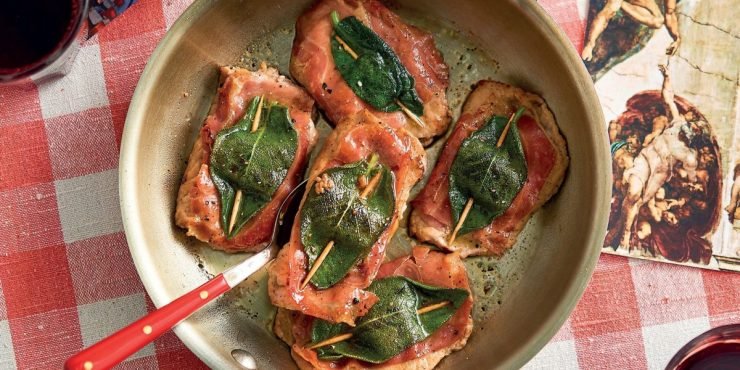
Each veal cutlet should be pounded lightly with a meat mallet to ensure uniform thinness. This not only makes the veal more tender but also ensures even cooking. Once the veal is prepared, a single sage leaf is placed on top, followed by a slice of prosciutto. These are secured with a toothpick, holding the components together during cooking.
Step Two: Cooking the Veal
The cutlets are then seared quickly in a mixture of butter and olive oil. The oil prevents the butter from burning, while the butter adds flavor. The goal is to achieve a light browning without overcooking the veal. Because the slices are so thin, this step requires only a couple of minutes on each side.
Step Three: Creating the Sauce
After the veal has been removed, the pan is deglazed with dry white wine. The wine lifts the caramelized bits from the pan, creating the base of the sauce. A small knob of butter is whisked in to add richness and create a glossy finish. The veal cutlets are then returned to the pan briefly, just long enough to absorb the flavors of the sauce.
Step Four: Serving the Dish
Traditionally, saltimbocca alla Romana is served immediately, while still hot. The cutlets are placed on a warmed plate and spooned with the pan sauce. Some Roman chefs also add a squeeze of fresh lemon juice for a final touch of brightness.
Pairing Saltimbocca alla Romana with Side Dishes
While the veal is the star, the sides chosen can elevate the dish even further. In Rome, it is common to serve saltimbocca with sautéed spinach, roasted potatoes, or simple buttered carrots. These sides complement the richness of the meat without distracting from it. A light green salad with olive oil and lemon also works beautifully, cleansing the palate between bites.
For a more indulgent meal, creamy polenta or risotto can be served alongside. These absorb the sauce wonderfully, making them ideal companions. However, restraint is key; the sides should never overpower the main dish.
Wine Pairings for Saltimbocca
Pairing the right wine with saltimbocca alla Romana enhances the dining experience. A crisp, dry white wine such as Verdicchio, Orvieto, or Pinot Grigio works beautifully, echoing the wine used in the sauce. For those who prefer red, a light-bodied option such as Chianti or a young Barbera provides balance without overwhelming the delicate veal.
The general rule is to avoid heavy, tannic wines, as these can clash with the saltiness of prosciutto and the freshness of sage. A lively, balanced wine allows the flavors of the dish to shine.
Variations on the Classic Dish
While the authentic saltimbocca alla Romana recipe calls for veal, many home cooks experiment with substitutions. Chicken and pork are the most common alternatives, especially in regions where veal is less available or less affordable. These versions can still be delicious but are technically adaptations rather than true saltimbocca alla Romana.
Another variation involves adding a touch of cream to the sauce, though this is more common outside Italy. In Rome, the sauce is kept simple with just wine and butter, allowing the core ingredients to remain the focus.
Cultural Significance of Saltimbocca
Beyond its flavor, saltimbocca alla Romana holds cultural significance in Italian cuisine. It is a dish often prepared for special occasions and family gatherings, embodying the Italian philosophy of convivial dining. Sharing saltimbocca at a table is about more than eating; it is about celebrating life, friendship, and tradition.
The dish has also gained international recognition, appearing on menus in Italian restaurants worldwide. Yet, despite its popularity, there is something uniquely satisfying about preparing it at home. Cooking saltimbocca alla Romana connects you to centuries of Roman culinary history, allowing you to bring a taste of the Eternal City into your kitchen.
Tips for Success at Home
For those attempting the authentic saltimbocca alla Romana recipe for the first time, a few tips can make all the difference.
Use the Right Pan
A heavy-bottomed skillet works best for searing the veal evenly. Avoid overcrowding the pan, as this can cause the meat to steam rather than brown.
Control the Heat
The butter should sizzle gently without burning. If the heat is too high, the prosciutto will crisp too quickly, and the veal may toughen.
Don’t Overcook the Veal
Because the slices are thin, veal cooks quickly. Overcooking can make it dry and chewy, so pay close attention during the searing process.
Balance the Sauce
The sauce should not be too salty. Remember that prosciutto already contributes saltiness, so avoid adding extra salt until after tasting the final dish.
Conclusion
An authentic saltimbocca alla Romana recipe offers much more than a satisfying meal; it delivers an experience rooted in Roman culture and history. By combining just a few high-quality ingredients, veal, prosciutto, sage, wine, and butter, this dish achieves extraordinary depth of flavor. It exemplifies the Italian culinary principle of simplicity elevated through care and attention.
Cooking saltimbocca at home allows you to engage with this tradition directly, experiencing firsthand why Romans have cherished it for generations. Whether served for a family dinner or a special occasion, this dish captures the essence of Italian hospitality and the joy of sharing good food. With the right ingredients, technique, and a little patience, saltimbocca alla Romana truly does jump in the mouth, just as its name promises.


Add comment