 Abraham
Italian cuisine is one of the richest in the world, not only because of its pastas, pizzas, and wines but also because of its exceptional meat dishes that reflect the unique heritage of each region. From the Alps of the north to the sun-kissed coasts of the south, every part of Italy has developed its own way of preparing and celebrating meat. These recipes often carry centuries of tradition, rooted in local ingredients, family gatherings, and regional pride. Exploring these meat dishes is like embarking on a journey across Italy’s varied landscapes and cultures.
Northern Italy: Richness and Alpine Influence
The northern regions of Italy are influenced heavily by their proximity to Austria, Switzerland, and France. The cuisine here leans toward butter, cream, and hearty preparations meant to warm the body during cold winters. Meat dishes are often robust, layered with flavor, and sometimes paired with polenta or risotto instead of pasta.
Brasato al Barolo from Piedmont
Perhaps one of the most iconic northern dishes is Brasato al Barolo, a beef braise cooked slowly in the prestigious Barolo wine. The beef is marinated with herbs, garlic, onions, and red wine before being simmered to tenderness. What sets this dish apart is the depth of flavor brought by the Barolo wine, which has earned international acclaim. Traditionally served with polenta, Brasato al Barolo reflects the elegance of Piedmontese cooking while showcasing the region’s devotion to quality wines.
Spezzatino di Cervo from Trentino-Alto Adige
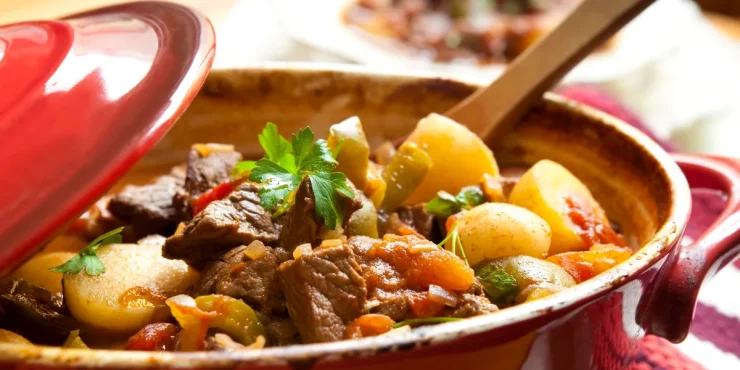
In the Alpine north, game meat has long been a staple. Spezzatino di Cervo, or venison stew, highlights this tradition. Venison is cubed and simmered with juniper berries, red wine, and aromatic vegetables. The dish is rich yet earthy, perfectly complementing the mountainous environment. It is usually paired with bread dumplings, locally known as canederli, which soak up the flavorful sauce.
Cotoletta alla Milanese from Lombardy
Cotoletta alla Milanese is another northern masterpiece. This breaded veal cutlet, fried in butter, is the ancestor of the famous Wiener schnitzel. Traditionally, it is served bone-in, golden and crisp on the outside but tender within. Over time, variations have emerged, but the true Milanese version relies on simple yet precise technique, letting the quality of the veal shine.
Central Italy: Hearty and Rustic Traditions
Central Italy, with regions such as Tuscany, Umbria, and Lazio, is known for rustic, farm-to-table meals. Here, meat dishes highlight simplicity, often involving roasting, braising, or grilling, and relying heavily on olive oil, herbs, and robust wines.
Bistecca alla Fiorentina from Tuscany
Tuscany is home to the legendary Bistecca alla Fiorentina, a large T-bone steak cut from the prized Chianina cattle. This steak is grilled over high heat, seasoned only with salt, pepper, and olive oil, and served rare to preserve its natural flavor and juiciness. It is not merely a dish but a cultural experience, often shared among several people due to its sheer size. Paired with a Tuscan red like Chianti, it epitomizes the rustic luxury of the region.
Porchetta from Lazio and Umbria
Porchetta is a traditional roast made from deboned pork, seasoned generously with garlic, rosemary, fennel, and other herbs, then rolled and roasted until the skin is perfectly crisp. This dish has a deep history as a celebratory food and is often sold at street fairs, markets, and festivals. The tender, flavorful meat is commonly sliced thin and enjoyed in sandwiches, but it can also be served as the centerpiece of a meal.
Cinghiale in Umido from Tuscany and Umbria
Wild boar, or cinghiale, is a hallmark of central Italian cooking. Cinghiale in Umido is a slow-braised dish where the meat is marinated in red wine and juniper berries before being cooked with tomatoes, garlic, and herbs. This dish captures the essence of the Tuscan and Umbrian countryside, offering a deep, rustic flavor that reflects the hunting traditions of the region.
Southern Italy: Bold Flavors and Mediterranean Spirit
In southern Italy, meat dishes are infused with bold flavors from garlic, chili peppers, and aromatic herbs. The warmer climate and influence from Mediterranean trade routes have left a legacy of vibrant, hearty recipes.
Polpette al Sugo from Campania
Meatballs in tomato sauce may seem simple, but in Campania, Polpette al Sugo are an art form. These meatballs are typically made from a blend of beef, pork, and sometimes veal, mixed with bread soaked in milk, cheese, and herbs. They are simmered in a rich tomato sauce and often served with pasta or crusty bread. Unlike their Americanized versions, Italian polpette are often smaller and more delicate, with flavors deeply tied to the Sunday family table.
Capretto al Forno from Calabria
Calabria is known for its bold and spicy cuisine, and Capretto al Forno, or roasted goat, is a festive dish especially popular during Easter. The goat meat is seasoned with garlic, rosemary, olive oil, and chili, then roasted until tender. The result is a dish that balances richness with spice, capturing the fiery spirit of southern cooking.
Involtini alla Siciliana from Sicily
Sicily’s Involtini are small meat rolls, typically made with beef or veal slices filled with breadcrumbs, raisins, pine nuts, and cheese. These rolls are skewered, grilled, or baked, and often served with a light tomato sauce. The combination of sweet, savory, and nutty flavors reflects Sicily’s multicultural heritage, influenced by Arab, Spanish, and Greek culinary traditions.
Island Specialties: Sardinia and Sicily
Italy’s islands bring their own unique interpretations of meat. Sardinia and Sicily in particular showcase dishes that are rooted in ancient pastoral and agricultural lifestyles.
Porceddu from Sardinia
Porceddu, or roasted suckling pig, is one of Sardinia’s most famous dishes. The piglet is slow-roasted on a spit, often over myrtle branches, until the skin becomes crispy and the meat incredibly tender. This dish is deeply tied to Sardinian festivals and communal gatherings, representing the pastoral life of the island.
Falsomagro from Sicily
Falsomagro, literally meaning “false lean,” is a stuffed beef roll filled with hard-boiled eggs, cheese, sausage, and sometimes vegetables, rolled up and braised in tomato sauce. Despite the name, it is far from lean and is a festive dish served during holidays. It reflects Sicily’s love for stuffed foods that layer flavors and textures in surprising ways.
Why Regional Meat Dishes Matter
Italian regional meat dishes are more than meals, they are living traditions. They embody the landscape, history, and identity of the people who created them. From the elegance of northern braises to the fiery roasts of the south, each dish is a cultural expression preserved through generations.
Tasting these dishes also means understanding Italy’s diversity. Unlike a singular national cuisine, Italy offers a mosaic of flavors where every village and province may have its own interpretation. What unites them is a respect for quality ingredients, seasonality, and the joy of sharing food with others.
Bringing Regional Meat Dishes into Your Kitchen
Cooking these dishes at home can be a rewarding way to experience Italy’s culinary landscape. While some recipes like Bistecca alla Fiorentina require specific cuts of meat, others such as Polpette al Sugo or Cinghiale in Umido can be adapted with locally available ingredients. The key is patience, proper seasoning, and honoring the simplicity that defines Italian cooking.
If you want to recreate Brasato al Barolo, you don’t necessarily need the prized Barolo wine, any good quality full-bodied red wine can work as a substitute. Similarly, Porchetta can be made at home with smaller cuts of pork, seasoned and roasted in the oven. The goal is not strict authenticity but capturing the spirit of the dish.
Experimenting with regional Italian meat dishes not only diversifies your cooking repertoire but also allows you to connect with Italy’s rich traditions. Hosting a dinner around these dishes, pairing them with appropriate wines, and sharing their history with your guests can make for a truly memorable experience.
Conclusion
Italy’s regional meat dishes are a journey into the heart of its culture. Each recipe tells a story, of peasants who made do with what they had, of nobility who demanded refinement, of hunters who brought game from the forest, and of families who gathered around the Sunday table. From the rich Brasato al Barolo of Piedmont to the rustic Cinghiale in Umido of Tuscany, from the fiery Capretto al Forno of Calabria to the festive Porceddu of Sardinia, these dishes are as diverse as the country itself.
Exploring them is an invitation to taste Italy in all its variety and authenticity. Whether you travel through its towns or cook from your own kitchen, these regional meat dishes will remind you why Italian cuisine continues to captivate the world.


Add comment