 Abraham
Bruschetta is one of Italy’s most beloved starters, celebrated for its simplicity, freshness, and the perfect combination of textures and flavors. This dish exemplifies Italian cooking at its best: minimal ingredients treated with care to produce maximum flavor. Bruschetta with tomato and basil, in particular, has become a symbol of Italian antipasti, capturing the essence of summer in every bite, yet its appeal remains timeless and works wonderfully year-round.
I have always appreciated bruschetta because it is more than just an appetizer. It embodies tradition, history, and the Italian way of valuing fresh, high-quality ingredients. For entertaining, a tray of tomato and basil bruschetta is visually appealing, easy to prepare, and instantly inviting. Each piece is a bite of Italy, with the aroma of garlic, olive oil, and basil evoking memories of rustic kitchens and sun-drenched gardens.
In this guide, I’ll take you through the history of bruschetta, how to select the right ingredients, step-by-step preparation, variations, and tips for serving this classic starter with elegance and flair.
The History of Bruschetta
Bruschetta has humble origins, dating back to central Italy, particularly Tuscany. Originally, it was a method for salvaging bread that had become slightly stale. Farmers and olive growers would grill slices of bread and rub them with garlic, drizzle them with olive oil, and sometimes add a sprinkle of salt. This simple preparation allowed them to enjoy fresh flavors with limited ingredients.
The term “bruschetta” comes from the Romanesco word “bruscare,” meaning “to roast over coals.” Over time, variations appeared throughout Italy. In southern regions, toppings often included tomatoes, anchovies, or vegetables, while in the north, bruschetta was sometimes served with cheese or cured meats. Today, bruschetta with tomato and basil is arguably the most iconic version, representing the perfect marriage of freshness, acidity, and aroma.
Selecting the Right Ingredients
A successful bruschetta starts with quality ingredients. Since the dish is simple, every component needs to shine.
Bread
The bread serves as the foundation. Italian country bread, ciabatta, or a rustic sourdough loaf works beautifully. Look for bread with a firm crust and a soft interior, capable of holding toppings without becoming soggy. Slicing the bread ½ inch thick ensures it crisps evenly while still providing a substantial bite.
Tomatoes
For tomato and basil bruschetta, the tomatoes are the star. Choose ripe, firm, and flavorful tomatoes. Heirloom or vine-ripened tomatoes are ideal because of their sweetness and complex taste. Cherry tomatoes can also work, offering a concentrated burst of flavor and vibrant color.
Basil
Fresh basil is essential. Its aromatic, slightly sweet, and peppery notes complement the acidity of the tomatoes perfectly. Look for bright green leaves without browning, as freshness is key to achieving that classic flavor.
Garlic
Garlic adds depth and a subtle bite. Traditionally, a peeled clove is rubbed directly on the grilled bread before adding toppings, infusing each slice with gentle garlicky aroma. The quantity should be balanced, enhancing but not overpowering the other flavors.
Olive Oil
Extra virgin olive oil is non-negotiable. Its fruity, slightly peppery notes are integral to authentic bruschetta. Drizzle generously over the bread and tomatoes for richness and cohesion.
Salt and Pepper
Finally, a pinch of sea salt and freshly ground black pepper brings the ingredients together. Salt enhances sweetness, while pepper adds a subtle warmth.
Preparing the Tomato and Basil Topping
Once ingredients are selected, the topping is simple yet requires careful preparation to achieve the ideal balance of flavors.
- Dice the Tomatoes: Remove the seeds if desired, and dice the flesh into uniform pieces. This ensures even flavor distribution on each slice of bread.
- Chop the Basil: Tear or chop fresh basil leaves, avoiding bruising them, as bruising can release bitterness.
- Combine Ingredients: In a bowl, mix tomatoes, basil, olive oil, salt, and pepper. Allow the mixture to rest for 10–15 minutes to let the flavors meld. Some recipes also include a splash of balsamic vinegar or a touch of minced garlic for extra complexity.
Toasting the Bread
Grilling or toasting the bread is crucial. It creates a sturdy base, adds smoky aroma, and enhances texture.
- Grill Pan Method: Brush slices lightly with olive oil and grill over medium-high heat until golden brown, about 2–3 minutes per side.
- Oven Method: Preheat the oven to 400°F (200°C). Brush bread with olive oil, place on a baking sheet, and bake for 8–10 minutes, flipping halfway through.
- Traditional Fire Method: For rustic authenticity, place bread on a wood-fired grill or open flame to impart a subtle smokiness.
Once toasted, rub each slice gently with a peeled garlic clove to infuse aroma.
Assembling the Bruschetta
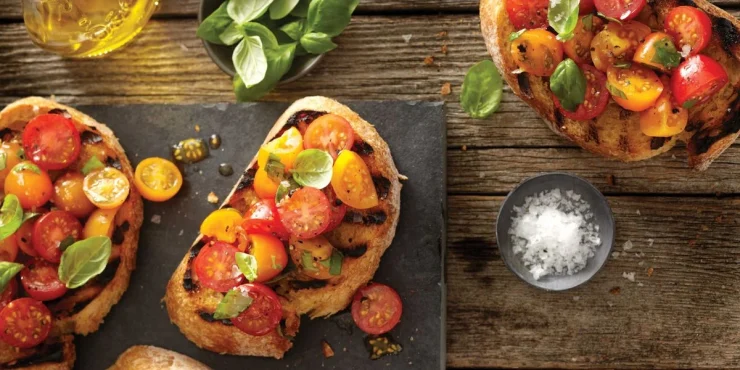
Layer the tomato and basil mixture generously on each toasted slice. Drizzle with a bit more olive oil and, if desired, a sprinkle of sea salt. Serve immediately to preserve the crisp texture of the bread.
For presentation, arrange the slices on a large platter, optionally garnished with additional basil leaves or microgreens for a vibrant, inviting look.
Variations on the Classic Tomato and Basil Bruschetta
While the traditional combination is timeless, bruschetta allows for creativity:
- Mozzarella or Burrata: Add slices of fresh mozzarella or dollops of burrata for a creamy contrast to the tomatoes.
- Avocado and Tomato: For a modern twist, mix diced avocado into the topping for extra richness.
- Roasted Tomatoes: Slow-roast tomatoes with olive oil, garlic, and herbs before topping the bread for deeper flavor.
- Balsamic Glaze: Drizzle lightly with balsamic reduction to introduce a sweet-tart layer.
- Pine Nuts or Capers: Add texture and subtle brininess with toasted pine nuts or capers.
Regional Influences
In Tuscany, bruschetta often emphasizes olive oil, garlic, and salt without additional toppings. In Campania, tomatoes and fresh basil dominate, showcasing the region’s rich tomato heritage. Sicily sometimes includes olives, capers, or anchovies, reflecting coastal influences. Exploring regional variations allows you to experience the diversity of Italian flavors through this simple dish.
Pairing Bruschetta with Italian Wines
Bruschetta with tomato and basil pairs wonderfully with Italian wines. A crisp, light white such as Pinot Grigio or Vermentino enhances the freshness of tomatoes and basil. Light reds like Chianti or Dolcetto complement the sweetness of tomatoes and the earthiness of grilled bread. For sparkling options, Prosecco adds celebratory bubbles that cleanse the palate between bites.
Hosting Tips for Entertaining
Bruschetta is ideal for entertaining because it can be prepared ahead and assembled quickly. Keep toasted bread slices ready, tomato topping mixed, and basil chopped. Assemble just before serving to prevent the bread from becoming soggy.
Serving bruschetta on a wooden board or a large platter encourages a communal, interactive dining experience. Guests can pick slices as they mingle, creating a casual and social atmosphere reminiscent of Italian gatherings.
The Nutritional Value of Tomato and Basil Bruschetta
This starter is not only delicious but also nutritious. Tomatoes provide vitamin C, potassium, and antioxidants like lycopene. Basil contributes vitamins A and K along with aromatic compounds beneficial for health. Olive oil adds heart-healthy fats, while bread provides energy and fiber, especially if using whole-grain varieties. Together, these ingredients create a starter that is both satisfying and wholesome.
Making Bruschetta Part of a Meal
Bruschetta can stand alone as an appetizer or be part of a larger Italian-themed meal. Pair it with antipasto platters, minestrone soup, or a light pasta dish for a complete menu. Its simplicity makes it versatile, fitting seamlessly into casual lunches, dinner parties, or holiday spreads.
Tips for Perfecting Your Bruschetta
- Use Ripe Tomatoes: Flavor is everything. Avoid watery or underripe tomatoes.
- Toast Bread Properly: Ensure crispness to prevent sogginess.
- Balance Flavors: Taste and adjust salt, pepper, and olive oil.
- Fresh Basil Only: Dry basil cannot replicate the fragrance and flavor of fresh leaves.
- Serve Immediately: Bruschetta is best when fresh, as the bread retains its crunch and the topping is vibrant.
Conclusion
Bruschetta with tomato and basil is a timeless Italian starter that celebrates simplicity, quality, and tradition. With fresh ingredients, perfectly toasted bread, and careful assembly, this dish transforms humble elements into a dish that embodies Italian culinary philosophy.
Whether you are entertaining guests, preparing a family meal, or enjoying a quiet evening at home, bruschetta offers a combination of flavor, texture, and visual appeal that never fails to impress. Its flexibility allows for creativity, while its roots honor centuries of Italian culinary heritage.
Serving bruschetta is more than offering an appetizer, it’s offering a taste of Italy, an invitation to savor each bite, and a way to connect with the warmth and generosity of Italian dining traditions.
This classic starter remains relevant across generations, proving that sometimes the simplest dishes carry the deepest flavors and the richest stories.


Add comment