 Abraham
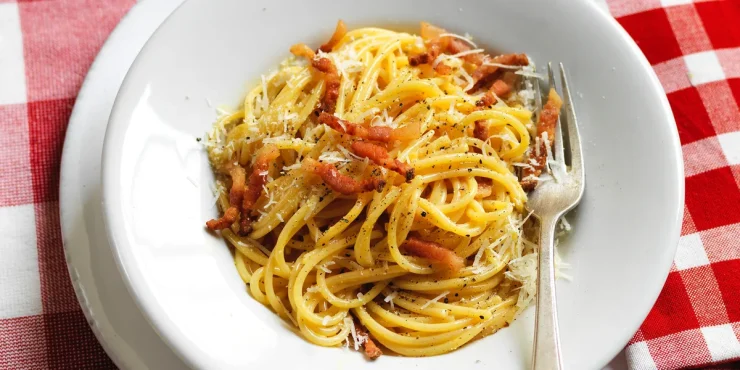
Spaghetti carbonara is one of those dishes that often sparks debate among cooks, both in Italy and abroad. Everyone seems to have their own interpretation, yet the traditional Roman recipe remains a benchmark of simplicity and flavor. I have cooked countless bowls of carbonara over the years, and the more I return to the authentic method, the more I appreciate its elegance. No cream, no garlic, no onion, no shortcuts, just a perfect balance of pasta, guanciale, pecorino romano, eggs, and black pepper. The beauty of carbonara lies in respecting the core ingredients and mastering the technique that transforms them into a silky, savory masterpiece.
The Soul Of Carbonara
Carbonara comes from Rome, and while its origins are debated, what is clear is that the dish has been cherished as a comfort food and a culinary treasure for generations. Its foundation is guanciale, cured pork cheek, which renders a rich and distinct fat that infuses the entire dish with flavor. Pecorino romano brings sharpness and saltiness, while eggs provide the creamy base for the sauce. Black pepper balances everything with its earthy heat. The soul of carbonara is authenticity, and when I prepare it the right way, I feel connected to a tradition that has remained intact for centuries.
Why Guanciale Matters
Many people try to substitute pancetta or even bacon, but guanciale is truly irreplaceable in this dish. It has a higher fat content, a more delicate texture, and a robust flavor that melts beautifully into the pasta. When rendered slowly, guanciale turns golden and crisp while releasing flavorful fat that coats each strand of spaghetti. That fat is the foundation of carbonara’s richness. Whenever I use guanciale instead of a substitute, I notice how much deeper the dish tastes, and I always encourage anyone making this recipe to seek it out.
Pecorino Romano Over Parmesan
Another common adjustment I see is swapping pecorino romano for parmesan, but that changes the character of the dish entirely. Pecorino is made from sheep’s milk and has a sharp, salty bite that stands up to the richness of the eggs and guanciale. Parmesan is milder and nuttier, and while delicious in its own right, it softens the intensity that carbonara is known for. I find that pecorino not only balances the fattiness but also gives the sauce its authentic Roman edge.
The Role Of Eggs
Eggs are the key to carbonara’s signature creamy sauce, yet many people are intimidated by the technique of combining them with hot pasta without scrambling. The secret lies in timing and heat control. Traditionally, whole eggs and yolks are used together to achieve the right consistency. I prefer a balance of one whole egg for every two yolks, as this combination gives a luxurious texture without becoming too thick. The eggs are whisked with pecorino and plenty of black pepper before being added to the pasta. The residual heat gently cooks the mixture, resulting in a silky coating that clings to every strand of spaghetti.
Pepper As A Star Ingredient
Pepper is often underestimated, but in carbonara, it is essential. Freshly cracked black pepper adds fragrance and bite, cutting through the richness. I never use pre-ground pepper because it lacks the aromatic oils that elevate the dish. The pepper should be abundant and added both to the egg mixture and directly to the pasta, ensuring layers of flavor. Each time I grind peppercorns fresh, I am reminded of how important this step is, and the difference is immediately noticeable in the final dish.
Cooking The Pasta Properly
The pasta must always be cooked al dente, and spaghetti is the traditional choice. I use a large pot of salted boiling water, adding just enough salt to flavor the pasta without overpowering the sauce. The starchy water is essential for loosening the egg and cheese mixture later, so I always reserve at least a cup before draining. Timing is crucial, spaghetti should be cooked until firm yet tender, and then transferred directly into the pan with guanciale so that it absorbs the rendered fat.
The Technique Of Combining
This step is where many people make mistakes. If the eggs are added over high heat, they scramble and turn into a clumpy mess. The pasta should be removed from direct heat before incorporating the egg mixture. I usually let the spaghetti sit in the guanciale pan for a moment, allowing the fat to coat it, then I add a splash of reserved pasta water to moderate the temperature. The egg and cheese mixture is poured in, and I toss quickly and continuously, adding more pasta water as needed to create a glossy sauce. The goal is not to drown the pasta but to achieve a silky, cohesive coating that clings to each strand.
Common Mistakes To Avoid
One of the biggest mistakes is using cream. Authentic carbonara has no need for cream because the emulsion of eggs, cheese, fat, and pasta water creates all the creaminess required. Another error is overcooking the eggs, which results in a grainy texture. Using the wrong cheese or meat can also throw off the balance. I have seen recipes that add garlic, onion, or even peas, but those additions, while creative, take the dish away from its Roman roots. Staying true to the original ensures that carbonara retains its character.
My Authentic Recipe For Spaghetti Carbonara
Here is the version I prepare whenever I want to showcase carbonara the authentic way:
- 400 grams of spaghetti
- 150 grams of guanciale, cut into small strips
- 3 large egg yolks and 1 whole egg
- 100 grams of grated pecorino romano
- Freshly ground black pepper
- Salt for pasta water
I begin by whisking the yolks, whole egg, pecorino, and a generous amount of black pepper in a bowl until smooth. Then, I bring a large pot of salted water to a boil and cook the spaghetti until al dente. Meanwhile, I gently render the guanciale in a wide pan until crisp and golden, making sure not to rush this step, as the fat must melt evenly. Once the pasta is ready, I transfer it directly to the pan with the guanciale, tossing it in the rendered fat. I remove the pan from the heat, add a splash of pasta water, then pour in the egg mixture while tossing vigorously. I adjust with more water if needed until the sauce reaches a creamy, glossy consistency. Finally, I serve immediately with extra pecorino and pepper on top.
The Importance Of Serving Immediately
Carbonara is best enjoyed straight from the pan. Waiting too long allows the sauce to thicken and lose its silkiness. The pasta should be plated hot, with the sauce still clinging perfectly. I always encourage serving it family-style, letting everyone gather around the table to enjoy it together. The aroma of guanciale and the sharp bite of pecorino make it irresistible.
Why Simplicity Wins
What I love about carbonara is how it demonstrates the Italian philosophy of doing more with less. Just a handful of quality ingredients, treated with care, result in a dish that feels indulgent yet balanced. It proves that cooking doesn’t always require complex steps or long ingredient lists; sometimes, the secret is in respecting tradition and letting simplicity shine.
A Dish Rooted In Tradition
Whenever I make carbonara, I feel like I am participating in a ritual that has been handed down for generations. Roman cooks perfected this combination long ago, and while the world continues to put its spin on it, the authentic version remains the most satisfying. I appreciate the creativity of modern variations, but for me, nothing compares to the original recipe that relies solely on guanciale, pecorino romano, eggs, pepper, and pasta.
Bringing Carbonara Into Everyday Life
Although it feels special, carbonara can easily become part of everyday cooking. It is quick to prepare, requiring less than half an hour from start to finish, and it doesn’t demand elaborate equipment or obscure ingredients beyond guanciale. I often make it on busy weeknights when I want something comforting yet traditional. It reminds me that even the simplest meals can feel extraordinary when prepared with care.
The Lasting Appeal Of Authentic Carbonara
Spaghetti carbonara the authentic way will always remain a favorite of mine, not just because of its taste but also because of the story it tells. It represents Roman cuisine at its finest, bold, straightforward, and deeply satisfying. Every time I sit down to a plate, I am reminded of why this dish has endured and why it continues to inspire debate and devotion. Staying true to its origins keeps its legacy alive, and I believe that is the greatest way to honor it.


Add comment