 Abraham
Polenta is one of the most versatile staples in Italian cuisine. Made from ground cornmeal, it can be creamy and comforting or firm and crisp, making it a perfect companion to a wide variety of Italian dishes. While often considered a humble side, polenta has the power to elevate a meal when prepared thoughtfully, seasoned well, and paired with the right flavors.
I have always admired polenta for its adaptability and the warmth it brings to a table. It’s a blank canvas, ready to absorb the flavors of sauces, cheeses, and roasted vegetables. Its history in Italian kitchens shows that even simple ingredients can create culinary magic. Polenta side dishes can steal the show at a family dinner, a festive holiday meal, or an elegant dinner party.
In this guide, I will explore the history of polenta, the best types of cornmeal to use, step-by-step preparation methods, a variety of side dish ideas, and tips for serving polenta that will impress every guest.
The History of Polenta
Polenta has been a staple of northern Italian cuisine for centuries. Before pasta became widespread, cornmeal-based dishes like polenta provided a filling and inexpensive source of energy. Traditionally, it was cooked over open fires in large cauldrons and served as a base for stews, meats, and vegetables.
Polenta’s popularity spread from rural kitchens to city tables, where it transformed from a peasant dish into a versatile accompaniment appreciated by chefs and home cooks alike. Today, polenta is recognized internationally, and Italian families continue to enjoy it in a variety of textures and flavors.
Choosing the Right Cornmeal
The type of cornmeal you use affects the texture and flavor of your polenta:
- Coarse Cornmeal: Yields a slightly grainy, rustic texture, ideal for firm polenta or grilled polenta cakes.
- Medium Cornmeal: Offers a balance between creamy and slightly coarse textures, versatile for most recipes.
- Fine Cornmeal: Produces silky, smooth polenta perfect for creamy versions or soft side dishes.
- Instant or Pre-Cooked Polenta: Convenient but less flavorful than traditional cornmeal; best used when time is limited.
Choosing high-quality cornmeal ensures the flavor of your polenta complements the dishes it accompanies.
Cooking Polenta Perfectly
Polenta can be prepared in a few different ways, depending on the desired texture: creamy, soft, firm, or baked.
Creamy Polenta
- Bring water or broth to a boil in a large saucepan. Use a ratio of 4 parts liquid to 1 part cornmeal.
- Gradually whisk in cornmeal to avoid lumps.
- Reduce heat and simmer gently, stirring frequently, for 30–40 minutes.
- Add butter, cheese, salt, and pepper to taste.
- Serve immediately for a smooth, comforting side dish.
Firm Polenta
- Cook polenta as above, then pour onto a greased baking dish or tray.
- Allow to cool and set for 1–2 hours.
- Slice into rectangles, squares, or rounds.
- Grill, bake, or pan-fry until golden and crisp.
- Serve as a hearty base for meats, vegetables, or sauces.
Classic Italian Polenta Side Dishes
Polenta is incredibly versatile, pairing beautifully with many Italian ingredients. Here are some classic side dishes that elevate polenta to a star component of the meal:
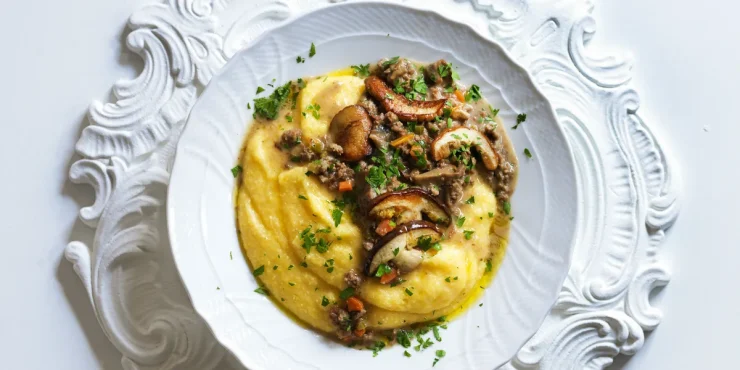
Polenta with Mushroom Ragù
Mushrooms add earthy, savory notes that complement creamy polenta perfectly.
Ingredients:
- A variety of mushrooms (cremini, porcini, or shiitake)
- Garlic and shallots
- Olive oil
- Fresh thyme
- White wine
- Salt and pepper
Preparation:
Sauté garlic and shallots in olive oil, add mushrooms, and cook until tender. Deglaze with white wine, season with salt, pepper, and thyme, and simmer until fragrant. Serve over creamy polenta for a rich, satisfying side dish.
Polenta with Roasted Vegetables
Roasted vegetables bring color, texture, and natural sweetness to polenta:
Ingredients:
- Zucchini, bell peppers, carrots, and cherry tomatoes
- Olive oil
- Salt, pepper, and rosemary
Preparation:
Toss vegetables in olive oil and seasonings, roast at 400°F (200°C) until tender and caramelized. Spoon roasted vegetables over polenta and drizzle with extra olive oil for a vibrant, flavorful side.
Polenta with Gorgonzola and Walnuts
Gorgonzola cheese adds creamy richness, while walnuts provide crunch and depth:
Ingredients:
- Gorgonzola cheese, crumbled
- Toasted walnuts, chopped
- Fresh parsley
- Black pepper
Preparation:
Stir gorgonzola into hot polenta until melted. Top with toasted walnuts, sprinkle with parsley, and add freshly ground black pepper. This side dish is decadent yet simple.
Polenta Cakes with Tomato Sauce
Firm polenta can be transformed into golden cakes served with tomato sauce for a comforting, rustic side:
Ingredients:
- Cooked firm polenta, sliced into rounds
- Olive oil for frying
- Marinara or tomato sauce
- Fresh basil
Preparation:
Pan-fry polenta slices until golden and crisp. Top with warm tomato sauce and fresh basil. This dish pairs wonderfully with roasted meats or grilled vegetables.
Polenta with Italian Sausage and Peppers
This combination highlights classic Italian flavors:
Ingredients:
- Italian sausage, sliced or crumbled
- Bell peppers and onions, sliced
- Garlic and olive oil
- Tomato paste or sauce
Preparation:
Sauté sausage until browned, remove, and cook peppers and onions in the same pan. Add tomato paste or sauce and return sausage to the pan. Serve over creamy or firm polenta for a hearty, satisfying side dish.
Creative Polenta Variations
Polenta’s versatility allows for creative approaches that highlight seasonal ingredients or personal preferences:
- Polenta with Pesto: Stir fresh basil pesto into creamy polenta for a vibrant flavor.
- Polenta with Seafood: Top firm polenta slices with sautéed shrimp, clams, or calamari.
- Polenta with Truffle Oil: Drizzle truffle oil over creamy polenta for an indulgent, earthy taste.
- Polenta with Roasted Butternut Squash: Combine roasted squash, sage, and Parmesan for a fall-inspired side dish.
These variations demonstrate polenta’s adaptability and its ability to complement both simple and complex dishes.
Tips for Perfect Polenta Side Dishes
- Use Broth for Extra Flavor: Chicken, vegetable, or mushroom broth enhances the polenta’s depth.
- Stir Frequently: Prevents lumps and ensures even cooking.
- Finish with Butter or Cheese: Adds creaminess and richness.
- Experiment with Textures: Creamy, firm, grilled, or fried polenta all offer unique experiences.
- Pair Thoughtfully: Match flavors to your main dishes, balancing richness, acidity, and texture.
Following these tips ensures your polenta side dishes are both delicious and impressive.
Serving Polenta Like a Pro
Polenta can steal the show when plated beautifully:
- Layer Flavors: Start with polenta, add vegetables, proteins, or sauces, and finish with herbs or cheese.
- Contrast Textures: Combine creamy polenta with crunchy toppings like toasted nuts or crisp vegetables.
- Add Color: Use bright vegetables, herbs, and sauces for visually appealing presentation.
- Serve Family-Style: A large platter of polenta with assorted toppings encourages sharing and interaction at the table.
Polenta side dishes are versatile enough to complement both casual family dinners and elegant dinner parties.
Pairing Polenta with Italian Wines
The flavors of polenta side dishes can be highlighted by careful wine pairing:
- White Wines: Crisp whites like Soave or Pinot Grigio complement creamy or vegetable-based polenta.
- Red Wines: Light to medium-bodied reds, such as Chianti or Dolcetto, pair well with hearty meat or mushroom-based polenta dishes.
- Sparkling Wines: Offer a refreshing contrast to richer, cheese-forward polenta.
Selecting the right wine enhances the dining experience and highlights the best features of your polenta side dishes.
Bringing Polenta to Your Table
Polenta is more than a simple side dish; it is a celebration of Italian culinary tradition, versatility, and comfort. By preparing polenta thoughtfully and pairing it with flavorful toppings, you can elevate it from a humble accompaniment to the star of the meal.
Making polenta side dishes allows you to experiment with textures, flavors, and presentation while staying true to Italian traditions. It is a dish that encourages creativity, seasonal cooking, and the enjoyment of fresh, high-quality ingredients.
Conclusion
Polenta side dishes that steal the show are a testament to the versatility and depth of Italian cuisine. Whether creamy, firm, or grilled, polenta provides a foundation for bold flavors, fresh vegetables, cheeses, and savory sauces.
From mushroom ragù and roasted vegetables to Gorgonzola with walnuts and polenta cakes with tomato sauce, these side dishes can elevate any meal. By using high-quality cornmeal, fresh ingredients, and thoughtful preparation, polenta becomes a star accompaniment that delights the eyes and the palate.
Serving polenta side dishes is an opportunity to celebrate Italian culinary heritage, experiment with flavors, and bring comfort and elegance to your table. With careful preparation, creative toppings, and beautiful presentation, polenta can truly steal the show in any Italian-inspired meal.


Add comment